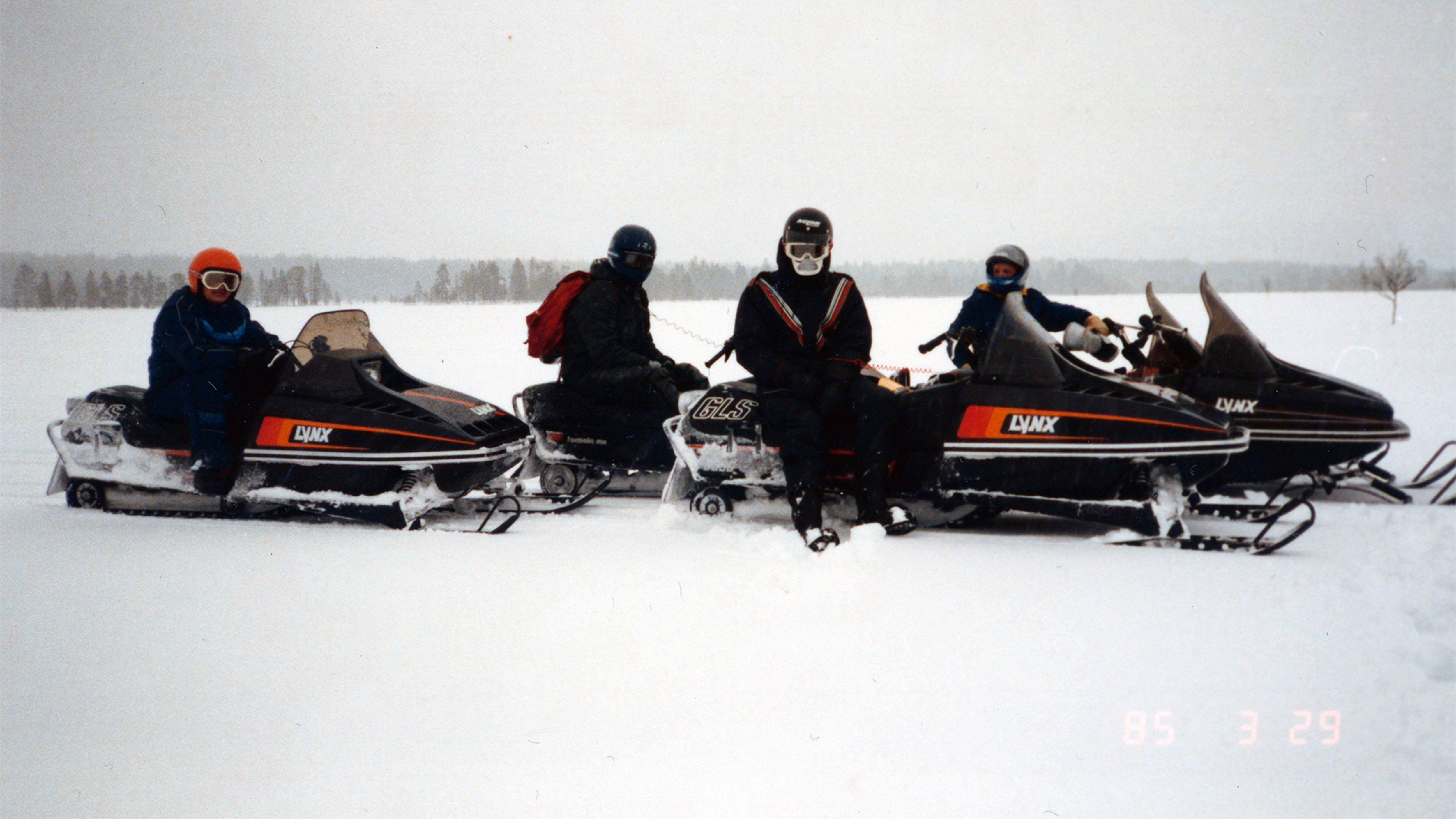
Recreational snowmobiling on the rise
Despite race snowmobiling having been a thing for years, in the early 80s a snowmobile was for most users a tool for taking care of chores in the winter and moving from one place to another. They’d ride a sled to their fishing spot or transport construction supplies to wilderness huts. Wide tracks were popular towing machines at farms and in forestry. Hints of recreational use were starting to appear however, as snowmobile clubs were being formed and the first snowmobile trails were opened.
"Snowmobiling started to become increasingly popular. However, trail snowmobiling was still something that wasn’t discussed much, as there were hardly any official trails. People used to follow natural trails and established tracks by riding in line, one after the other, to e.g. go to wilderness shelters to enjoy campfires," recalls Kari Ylipekkala.
At the time, Ylipekkala was working as a designer on the GL 250 utility snowmobile project, which was started around the same time as the sports sled project. He eventually had a career spanning over 40 years with Lynx snowmobiles and recently retired as Lynx product manager.
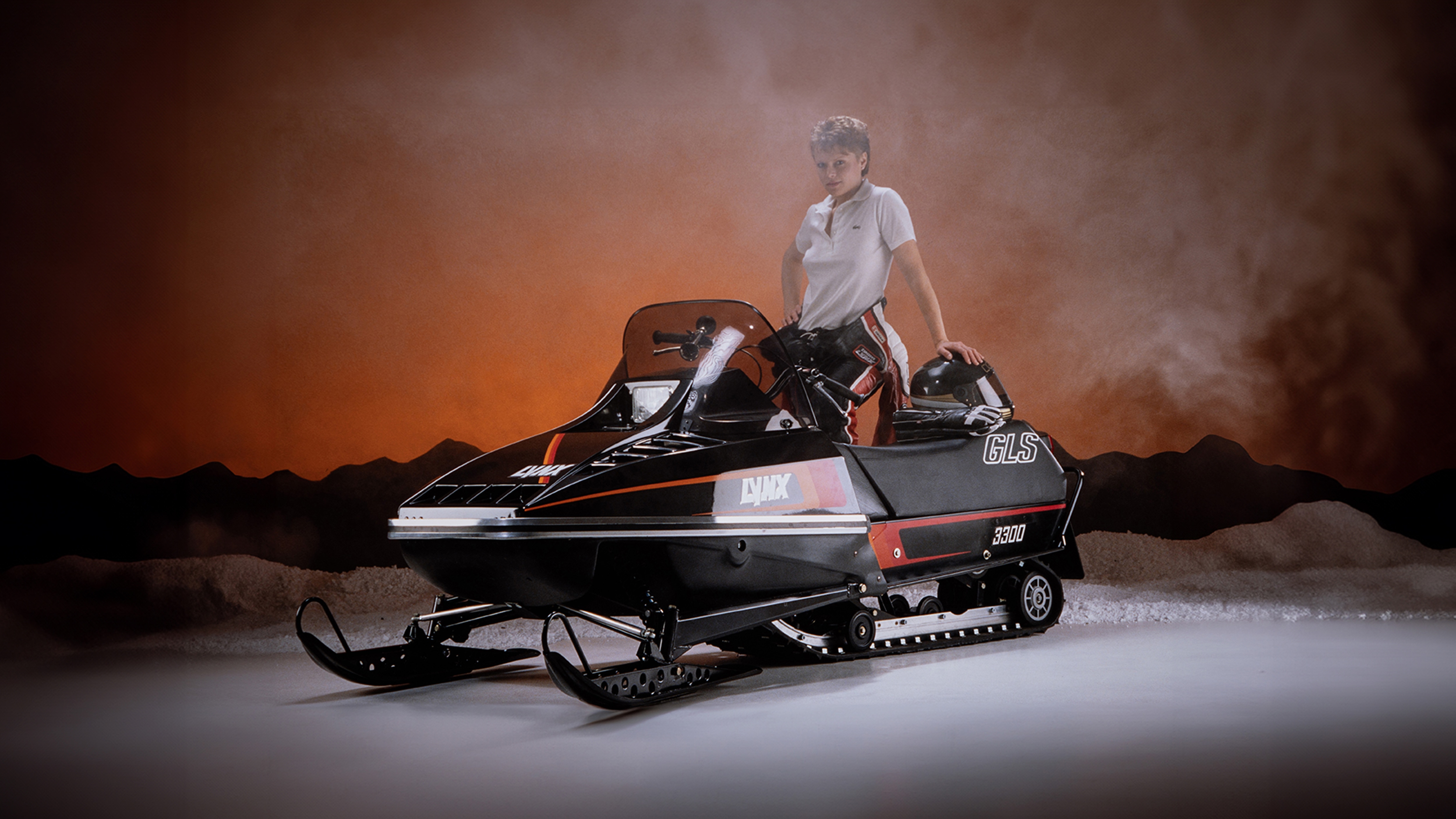
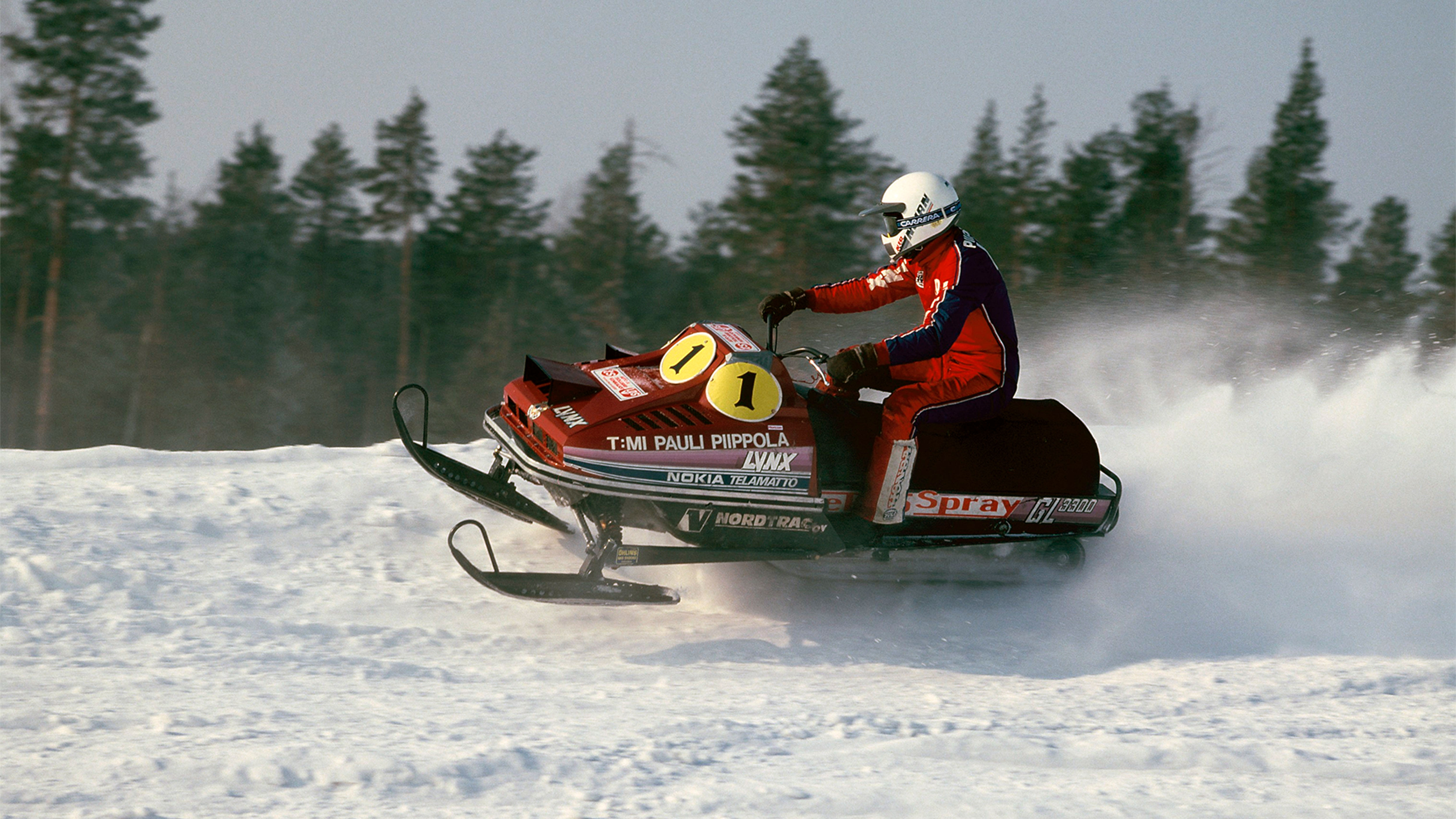
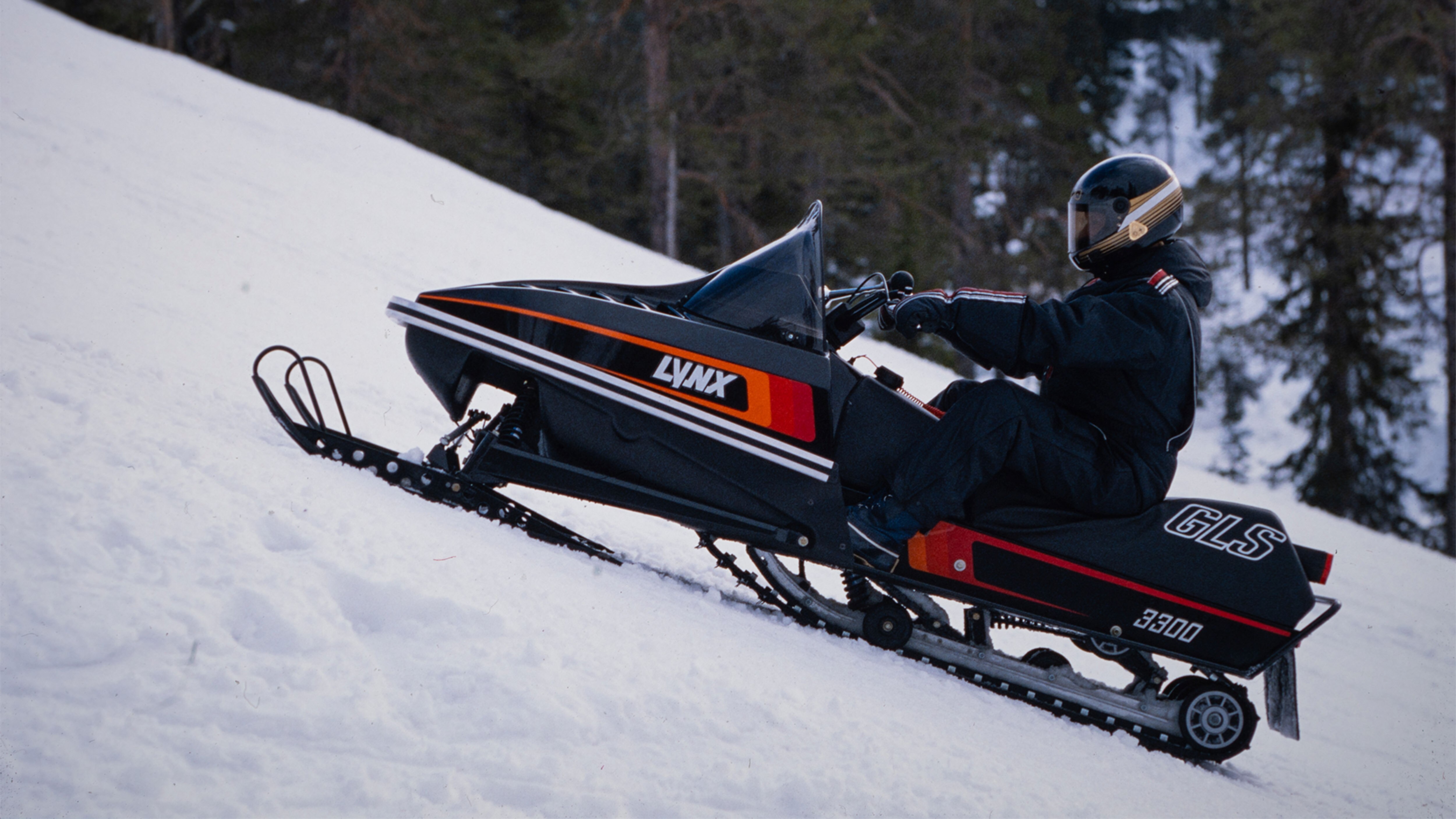
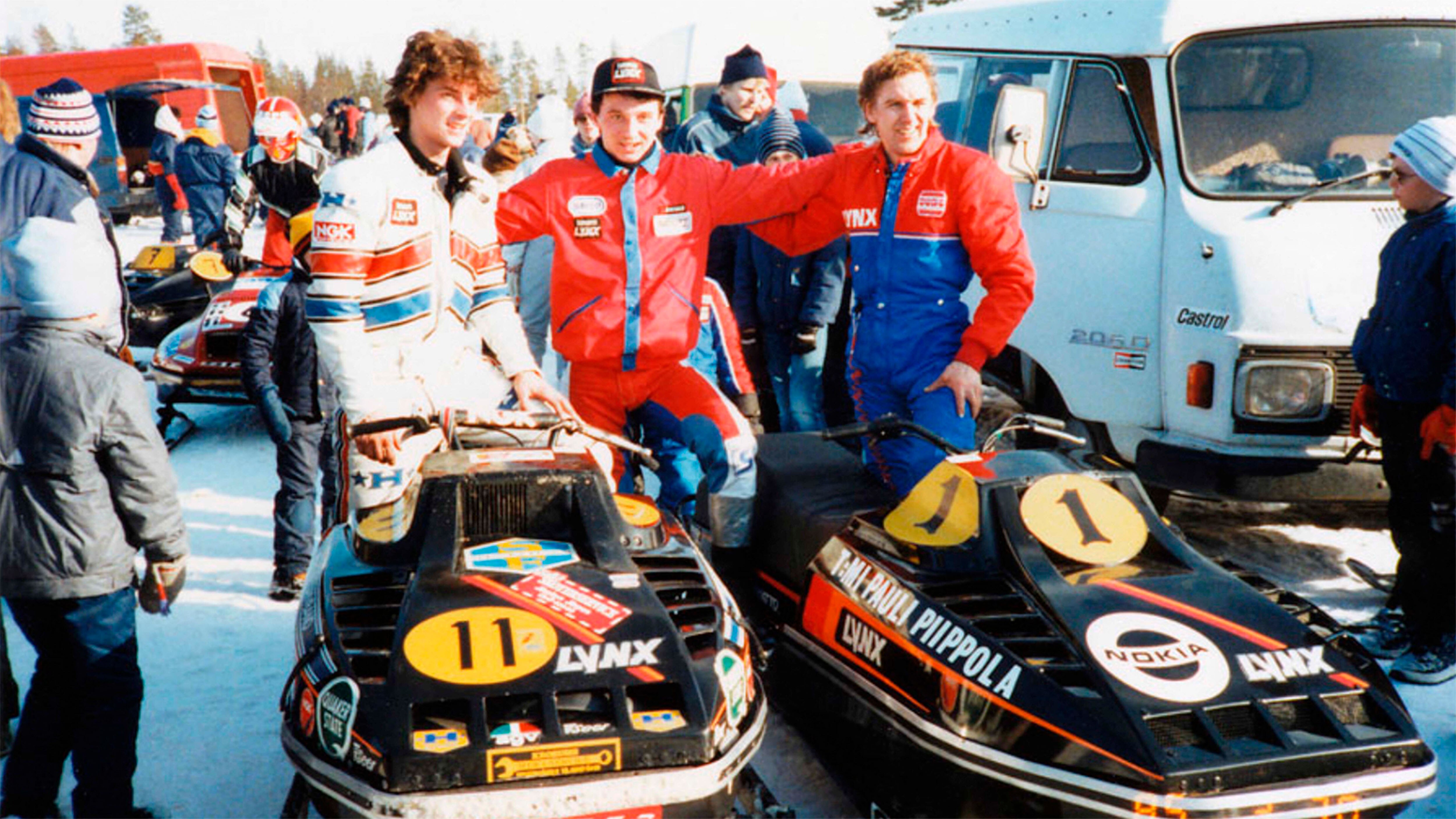
Nordtrac, Lynx snowmobiles’ manufacturer at the time, was in the early 1980s part of the Valmet tractor group, whose strategy was to produce only utility snowmobiles. The idea of building a sports sled was a very poor fit with that strategy, which sent some sparks flying at the factory. However, the success of Lynx in races and the growing pressure, especially from Sweden, to produce a recreational sled got the GLS project off the ground.
Markku Koivurova, who worked in product development, was handed the task of making the sports sled into a product. According to Juhani Tapio, it was clear from the start that the GLS had to be made more attractive than the Tinplate nose racer.
"A decision was made to use the existing technology from the Tinplate nose, but the sled had to look cool. No one would buy such an ugly-looking contraption!"
A steering 180°
Getting the GLS, which started as a garage project, into mass production was no walk in the park, as there were only two blueprints of the Tinplate nose sled – a driven pulley shaft and a driveshaft. The technical solutions were not always easy to reproduce. One such story relates to the sled’s steering.
"The Tinplate nose had a unique articulated steering system, which ran along the bottom plate, mediated by a shear joint, so that the tie rods were in front of the front support arms. The steering was very light. Thanks to the articulated steering, the skis turned only slightly in the initial movement of the steering, but turned a lot when turning the bar. However, the first prototype of the GLS had a slightly more complex steering," recalls Juhani Tapio.
One Friday evening, Product Development Manager Erik Ahmasalo drove the first prototype GLS home from the factory. The morning meeting at the factory following that weekend was filled with fire and brimstone, as Ahmasalo told others he had flown over the handlebars of the sled several times during the few kilometer ride.
"We raised the sled on a jack and noticed that its skis were starting to plow along with the suspension movement. The rush to get the sled into production was intense, so we decided to copy the Tinplate nose’s steering system to the GLS as-is. And it was excellent," Kolppanen sums up.